

A PRACTICAL GUIDE FOR NEIGHBORS
A useful first meeting ends with a clear next step—and a shared understanding of what needs attention.
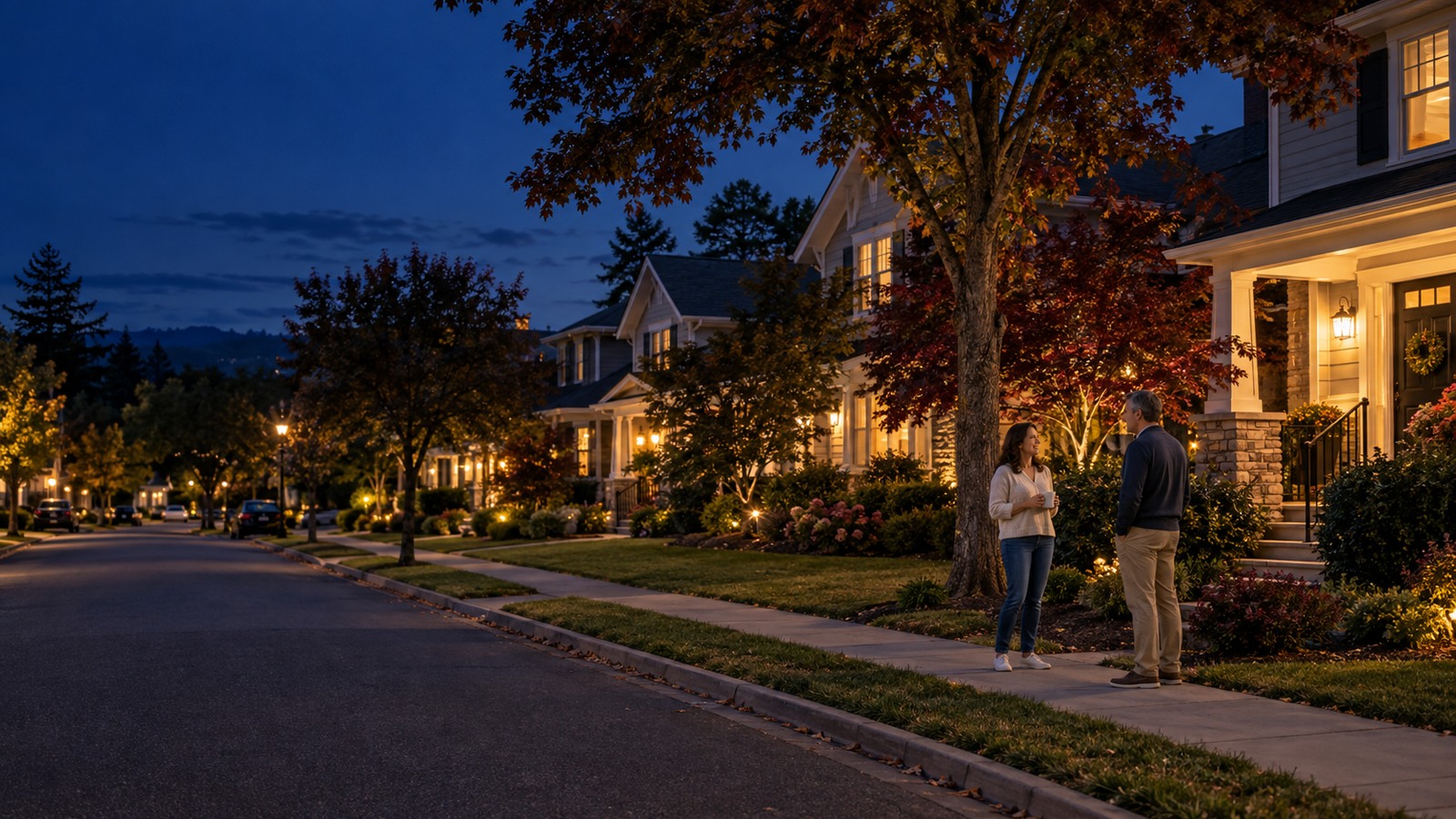
Begin with an everyday concern
Maybe the walkway between two homes is poorly lit. Maybe several residents have exterior cameras, but nobody knows where the gaps are. A neighborhood security conversation works best when it begins with something specific that people recognize.
The Totality Secure™ Safe Neighborhoods Program™ helps organize that conversation. This voluntary subscription program brings residents’ exterior security efforts into a coordinated view and gives subscribing neighborhoods access to Community Secure Score™ reports.
You do not need a dramatic incident to begin. You need a few willing neighbors and a practical question: what would help us understand our street better?
Bring a short agenda
Keep the first discussion focused enough that people can take part without preparing a presentation. These questions are a useful starting point:
- What is already in place? Consider exterior lighting, cameras, doorbells and the entrances or walkways they cover.
- Where are the gaps? Identify areas that need a closer look rather than assuming every device sees the whole street.
- What needs maintenance? A light that no longer works or a blocked view may deserve attention before a new purchase.
- Who will coordinate the next step? Choose a contact and agree when to check back.
Discuss coverage without collecting residents’ passwords or creating a shared feed. Review the program’s privacy and participation answers before making assumptions about access.
Read the video transcript
A clearer view of your street
The Totality Secure™ Safe Neighborhoods Program™ organizes voluntary participation and exterior security coverage.
Understand the gaps
Review entrances, driveways, walkways and the exterior lighting or views already in place.
Choose one practical step
Agree on a manageable action. Record what was completed and when it should be reviewed.
Return to the conversation
Community Secure Score™ reports support recurring review. Participation does not guarantee a particular outcome.
Use reports to keep the conversation grounded
Recurring Community Secure Score™ reports give participating neighborhoods a way to revisit conditions and progress. The separate address-level Totality Secure Score™ adds incident context for a selected location and time window.
That is where measurement supports the program: residents can return to the same questions, review the information available and record what has actually been done. A completed lighting repair is a clear action. A change in reported incidents is a separate observation, with other possible explanations.
For the broader relationship, read how the program creates a clearer picture of community progress. Before discussing any number, use our five questions for reading a Totality Secure Score™ report.
Separate useful information from assumptions
Published crime information can help frame a discussion, but reporting coverage varies. The FBI’s reporting overview is a useful reference for understanding where national statistics come from. Always check the source of the report in front of you.
Official sex offender registry information, often called Megan’s Law information, is separate from crime incident reporting. The national public registry resource provides an official starting point. Verify records with the responsible jurisdiction and use the information responsibly. The current address-level Score app does not include a registry feed.
Our guide to the Score’s sources and context explains why a modeled estimate and a reported incident should never be treated as the same thing.
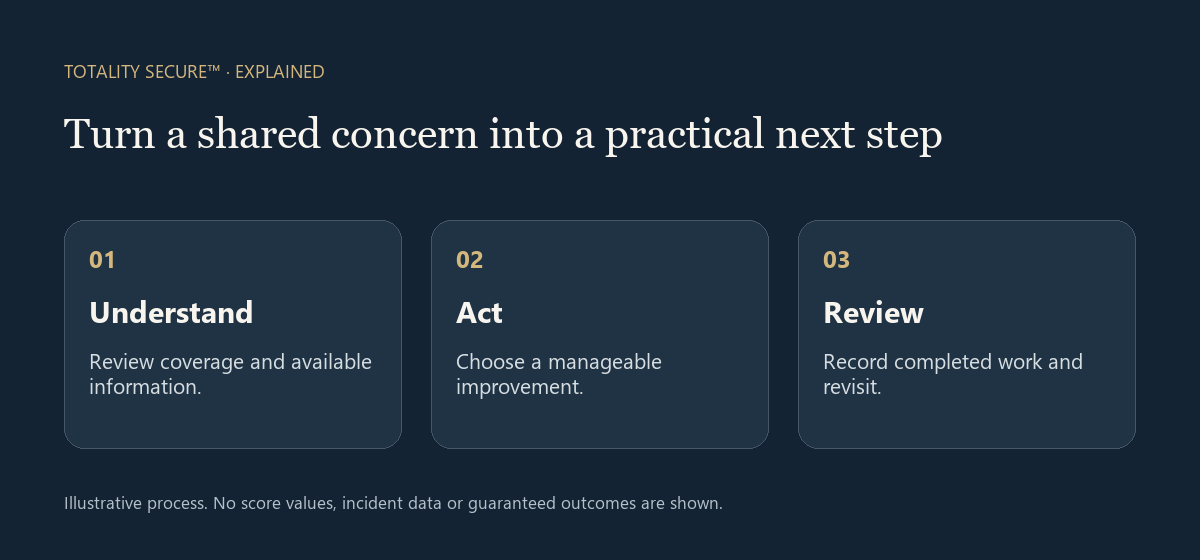
Finish with one manageable action
Agree on one next step: review a shared entrance, follow up on a lighting concern or ask Totality how neighborhood enrollment works. Record the action, a volunteer contact and a review date. That small amount of structure makes the next meeting much easier.
If equipment placement or maintenance needs a professional look, explore Totality’s security systems and CCTV services and ask about the appropriate scope for your community.
When residents are ready, follow the program’s getting-started guide. Participation and certification do not guarantee crime reduction, insurance savings or a particular security outcome. The immediate goal is a better-organized neighborhood conversation and a clear next step.
Read the video transcript
Give information a useful job
Use available context to ask a specific question about your neighborhood.
Review what you can improve
A lighting concern or exterior coverage gap can become a practical discussion.
Record the work separately
Track completed actions separately from changes in incident reports or scores.
Review and keep learning
A completed project does not prove it caused a change in crime. Revisit the information with context.
Common questions
Can a neighborhood start without an HOA?
The program welcomes neighborhood organizers as well as associations. Review the getting-started guide or contact Totality about your community’s circumstances.
Will neighbors get access to my cameras?
Coordinating exterior coverage does not mean sharing passwords or private camera feeds. Confirm privacy arrangements through the program’s current terms and FAQ.
What should we measure first?
Start with agreed actions and completed work, such as reviewing an entrance or repairing lighting. Interpret incident data separately, with its source and time window attached.